
Our Purpose
Connecting people who are hearing with people who are deaf serves several purposes, mainly to reduce audism. We seek to foster understanding and inclusion between individuals from different backgrounds; promote communication accessibility and break down barriers by facilitating meaningful interactions and mutual support. We hope to raise awareness of the experiences of persons who are d/Deaf and hard of hearing.
How We do This
- Connect people who are hearing with people who are d/Deaf and hard of hearing.
- Promote the learning of sign language.
- See our online video dictionary by Lois Maroney.
- Outreach to schools.
- Provide practical resources for the deaf and hard of hearing
Why?
What can people who are hearing learn from the d/Deaf?
- Communication skills
- Deaf individuals often excel in non-verbal communication, such as sign language and facial expressions, which can enhance hearing individuals’ ability to communicate effectively
- Reduce audism
- Interacting with individuals who are deaf can cultivate understanding towards different perspective and experiences
- Foster more inclusive society
- Adaptability
- Deaf individuals often demonstrate remarkable adaptability in navigating a world primarily designed for hearing people. They have engaged in innovative solutions and problem-solving to navigate a hearing world. They can inspire others to be more flexible and open-minded, helping them find creative solutions to challenges
- Appreciation of diversity
- Interacting with deaf individuals highlights the richness of diversity within the human experience.

Cat
Manager, NeoHear LLC
Cat is a life coach and grief coach with Masters degrees in education, business, and counseling psychology.
In December 2017, she suddenly lost her hearing completely. She founded NeoHear to empower the d/Deaf and hard of hearing and our hearing allies.
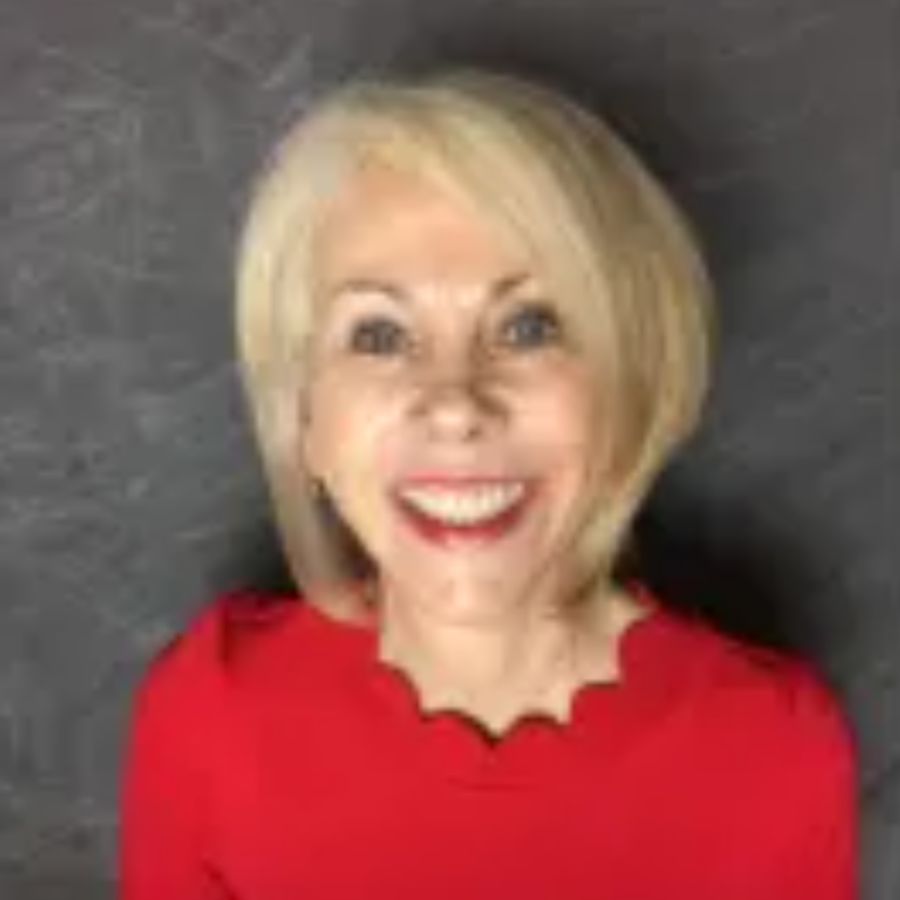
Lois
Lois has a Master of Education and a Master’s degree in Rehabilitation Counseling. Before becoming deaf, she was a high school foreign language teacher. Lois is now a Licensed Mental Health Counselor specializing in the emotional trauma caused by hearing loss and the impact it has on the individual as well as the family.

Michael
Michael is a technology and education entrepreneur, professor, and consultant. He is passionate about applying his knowledge and experience in helping to solve communication dilemmas amongst the d/Deaf and hard of hearing.
Michael is an alumnus of Cornell University (BS/MBA) and the University of Edinburgh (MSc/PhD).

Chunhui
Chunhui is a videographer, digital designer and eLearning specialist. She has been designing and developing eLearning courses with subject matter experts at the top universities and institutions in the UK.
Chunhui completed her MSc in Design and Digital Media at the University of Edinburgh, also MLitt in Publishing at Tongjing University in Shanghai, China.
Cat’s story
About Me
Cat
Florida, USA
Do you have any hearing?
I am profoundly deaf. I cannot hear anything at all.
How do you identify?
I identify as deaf or late-deafened.
Were you born with hearing?
How long have you been adapting?
I grew up with “perfect” hearing. I went suddenly deaf in December 2017, at age 43.
How did you lose your hearing?
I lost my hearing from viral meningitis and a very rare version of a rare autoimmune disease called relapsing polychondritis (RP). RP primarily involves cartilage tissue becoming inflamed. I was diagnosed with RP ten months after my deafness occurred and after several unrecognized flare-ups.
Do you have a cochlear implant (CI) or wear hearing aids?
How do they work for you?
I got a cochlear implant in January 2018 and was activated in February 2018. I did not have success with the CI, and, therefore, I had it removed in March 2023.
How do you communicate?
I am taking a speech reading course and sign language classes. I am mostly surrounded by hearing people who do not know sign language, so I rely on a speech-to-text app and some speechreading. I am teaching my friends and family some simple signs.
Favorite piece of technology?
Google Live Transcribe is the best speech-to-text app if it’s just another person and me. If I am in a group, I prefer that we all use Ava, so that I can tell who is speaking, but it gets difficult to keep up with the conversation if there are more than three people. There is a delay with these apps, so I often come into the conversation too late.
What do you like to do?
What are your hobbies?
I love to be outdoors and exercising. When I went deaf, I also lost my balance. I had trouble walking in a straight line and used walking sticks. Now, I my balance has much improved. I am able to hike over some strenuous terrain and I can run short distance. I like to do yoga and sometimes I paint for fun.
What is your profession?
After earning my master in counseling psychology and certification as a Mental Performance Consultant, I founded Summit Performance Consulting, LLC. At first, I worked mainly with athletes and students to improve their performance. Since my sudden deafness, I have taken courses on grief and loss and my practice has evolved to life coaching and grief coaching.
What are some challenges you have faced because of your hearing loss?
Group conversations are difficult. Sometimes I miss being able to easily chat with people at parties and just randomly on the walking path or in the Uber.
Having suddenly lost my hearing has been an emotional and spiritual journey. There are many everyday challenges, and I am still learning how to interact with the world without an “ability” that I relied on for the majority of my life. The term “hearing loss” makes me uncomfortable, because I have learned so much from my deafness and the people who have helped guide me on my journey – be they deaf or our hearing allies.
Are you a member of any d/Deaf or hard of hearing organizations? Which ones?
I am a member of and volunteer for ALDA (Association of Late-Deafened Adults).
Do’s and Don’ts
– Please help me by using Ava, the speech-to-text app I use in groups.
– Please help me by learning some common signs.
– Please do not say, “Never mind.”
– Please do not shush me!
– If I am speaking too loudly, just take your hand and lower it. This signals me to turn the volume down. Volume control is difficult to learn. Please be patient with me.
Any advice?
Take advantage of the technology out there.
Learn and reach out to the community. Take it one day at a time and be patient. You do not have to be an expert at lip-reading or sign language. Respect your challenges and take time to acknowledge your work.